
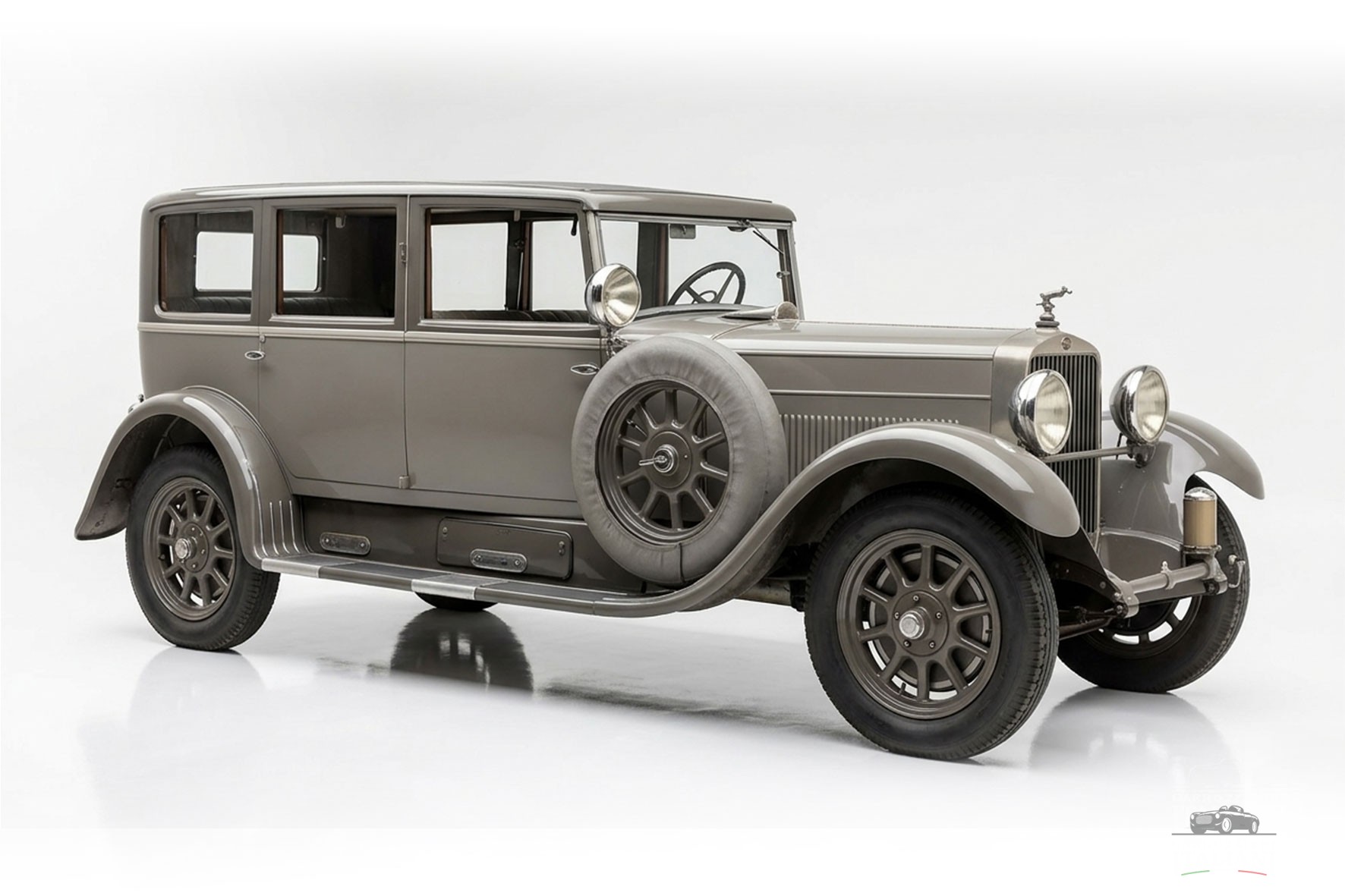
THE VEHICLE AT A GLANCE
Model dossier
- Production period
- 1926
- Body style
- Berlina
- Engine
- Inline-4
- Type
- Limited
THE PEOPLE BEHIND THE CAR
Coachbuilding, design & conversions

PRICE & SALES RECORD
Vehicle value
- Original price
- Not documented
- Latest recorded sale
- Not documented
01 / THE STORY
History & context
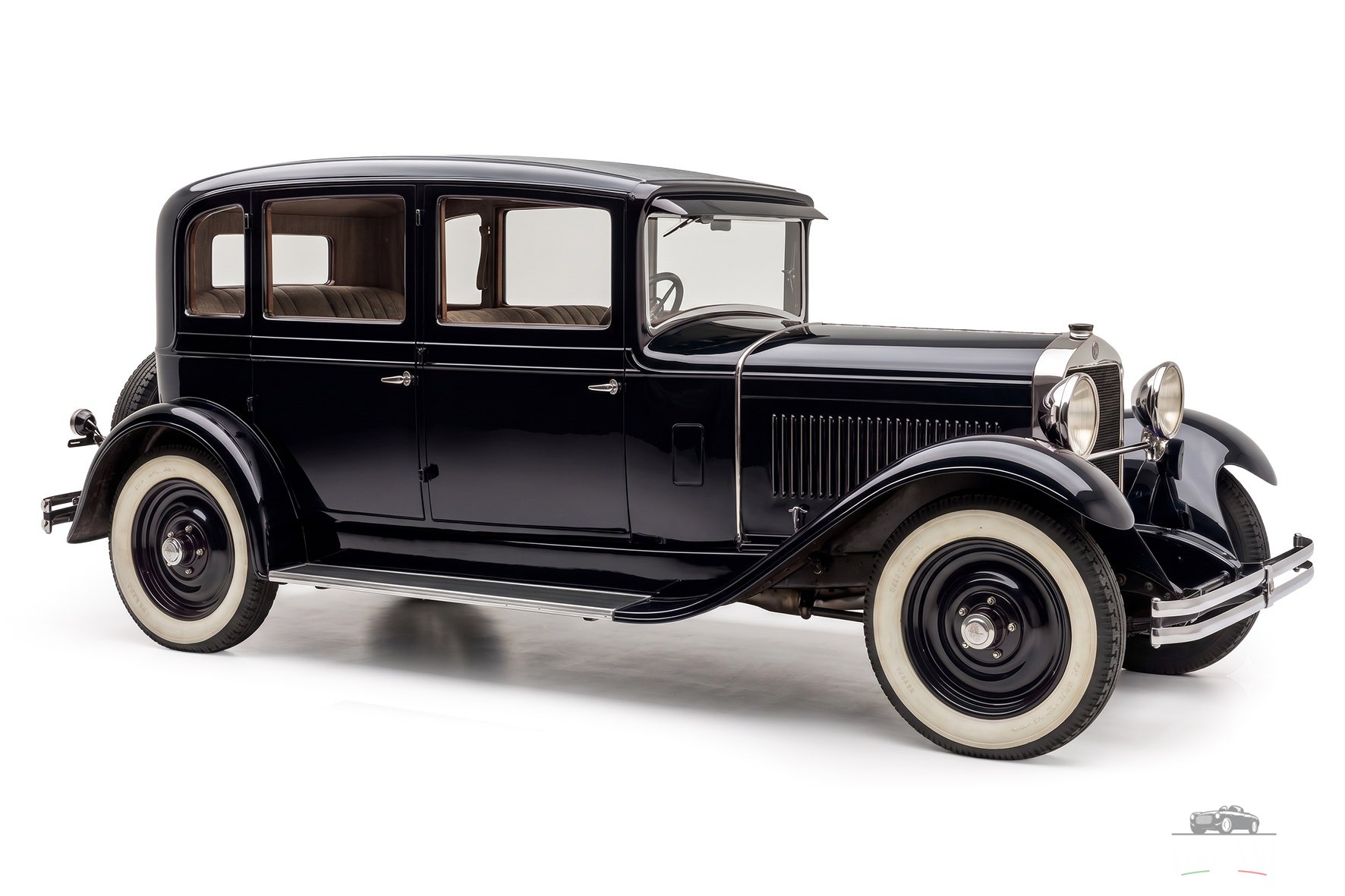
The Fiat 509 Garavini from 1926 is a custom-bodied variant of the standard Fiat 509, a compact passenger car introduced in 1925. Designed primarily as an entry-level model for the growing middle class, the base 509 featured a 990 cc inline four-cylinder engine, rated at approximately 22 horsepower. It was equipped with a three-speed manual gearbox, rear-wheel drive, and mechanically operated drum brakes on all four wheels. Suspension utilized semi-elliptic leaf springs both front and rear. Carrozzeria Garavini, active in Turin since the early 20th century, applied a more formal and upright sedan body to the 509 chassis. This specific example features a six-window layout with a fully enclosed cabin, fixed roof, and externally mounted spare wheel. The styling follows the typical coachbuilding conventions of the mid-1920s, with separate fenders, a tall vertical grille, and minimal integration between body and chassis components. Running boards and articulated steps facilitated access to the passenger compartment, which was configured to seat four to five occupants. Unlike the mass-produced factory versions, the Garavini-bodied 509 was constructed in very limited numbers and intended for clients seeking a more individualized vehicle within the same mechanical platform. The vehicle retained the mechanical specifications of the standard 509, but its increased body mass slightly impacted acceleration and top speed, which for the base model was approximately 75 km/h. Fiat produced around 90,000 units of the 509 in total across several variants, including torpedoes, spiders, and coupés. Custom coachbuilders such as Garavini accounted for a minor fraction of this output, typically working on special commission. The example shown represents the type of coachbuilt vehicle intended for private or institutional use prior to the shift toward fully standardized production in the 1930s. It remains a representative case of how Italian carrozzerie adapted compact chassis to meet the needs of conservative clientele, often emphasizing comfort and formal presentation over outright performance.
IN THE ARCHIVE
Coachbuilders & design studios
02 / TECHNICAL IDENTITY
Specifications & construction
Production & construction
- Production type
- Limited
Engine & performance
- Engine configuration
- Inline-4
Design & manufacture
- Manufacturer · Documented
- Fiat
- Coachbuilder / Body Builder · Documented
- Garavini
06 / EVENTS & AWARDS
Events & awards
Milano General · From the historical archive
- Date
- 1926
- Chassis
- General
07 / THE VEHICLE IN DETAIL
Photo gallery 2 photographs
08 / FROM THE ARCHIVE
Archive
References held in the vehicle dossier. Their inclusion does not establish that every historical claim has been independently verified.
| Reference | Source type |
|---|---|
| Carrozzieri-Italiani — Milano 1926 www.carrozzieri-italiani.com | Event archive |


THE CONVERSATION
Comments 0
Share a memory, a period photograph or a documented detail about this car.