
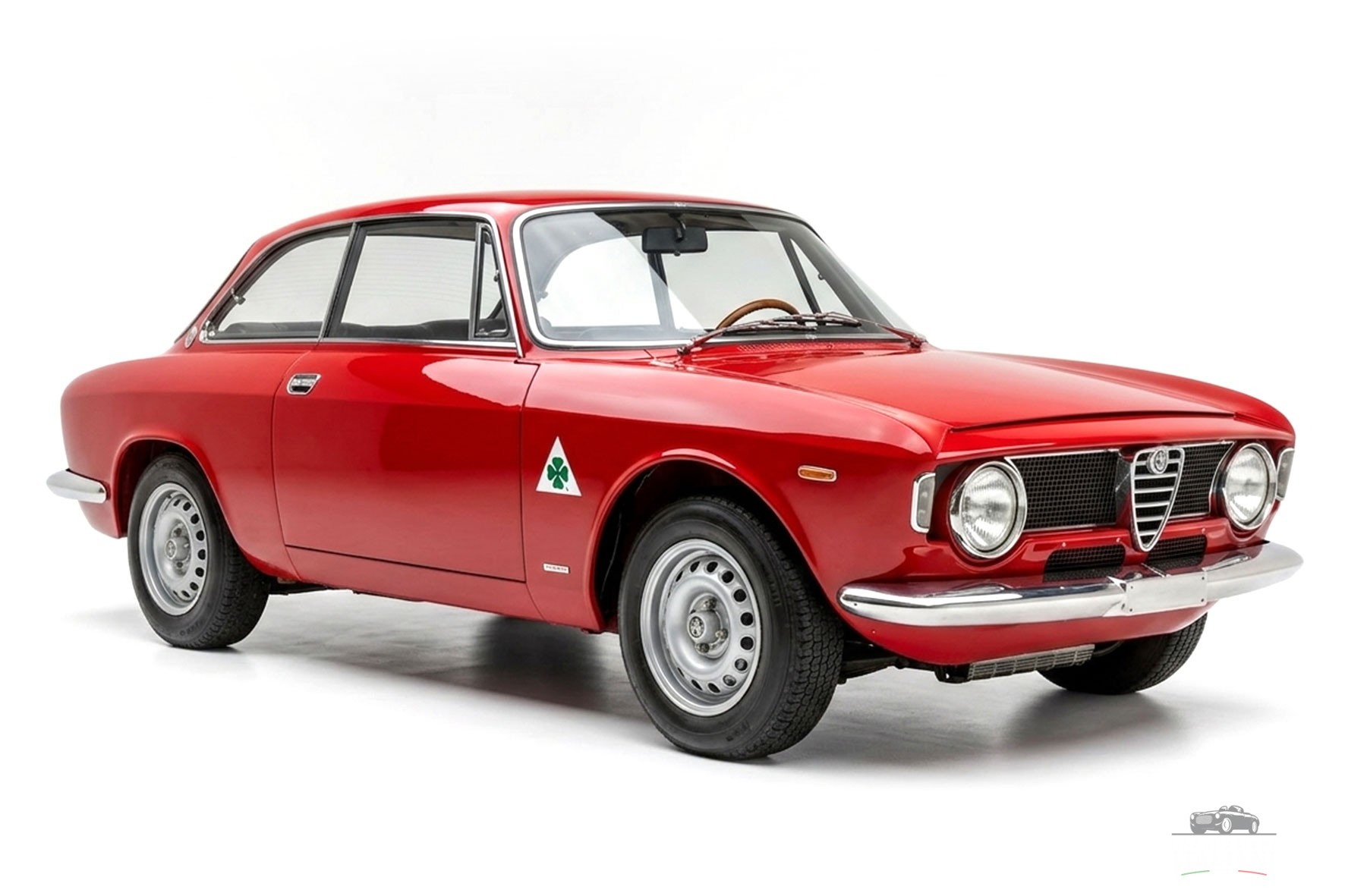
THE VEHICLE AT A GLANCE
Model dossier
- Production period
- 1965
- Body style
- Coupé
- Engine
- Twin-cam inline-four
- Type
- Limited
- Production
- 500
- Displacement
- 1,570 cc
- Power
- 115 CV
THE PEOPLE BEHIND THE CAR
Coachbuilding, design & conversions


PRICE & SALES RECORD
Vehicle value
- Original price
- Not documented
- Latest recorded sale
- Not documented
01 / THE STORY
History & context
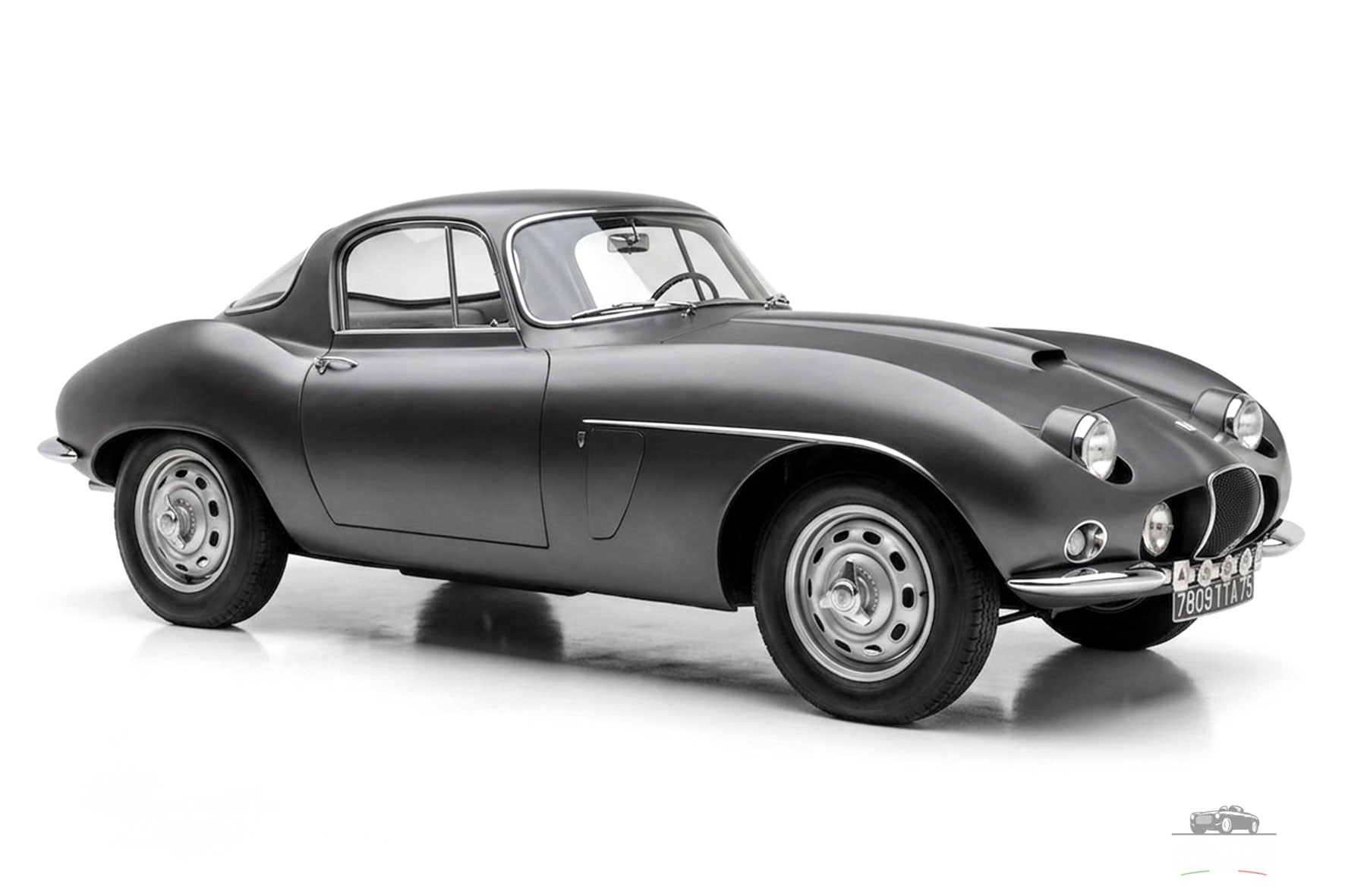
The Alfa Romeo Giulia Sprint GTA, introduced in 1965, was a lightweight evolution of the Giulia Sprint GT designed by Bertone, developed primarily for competition. The “A” in GTA stands for Alleggerita, indicating its reduced weight compared to the standard model. The bodywork retained the overall shape of the production GT coupé but featured extensive use of Peraluman 25 aluminium alloy for the outer panels, including the hood, doors, and trunk lid. Side and rear windows were made of Plexiglas, while the interior was simplified to reduce weight further. Additional savings were achieved through the use of magnesium components in areas such as the sump, valve cover, and wheel rims. Curb weight was reduced to approximately 745 kilograms in the Stradale (road) version. Power came from a modified version of the 1.6-litre inline four-cylinder engine, equipped with twin spark plugs per cylinder and twin Weber 45 carburetors. In road trim, the engine produced around 115 horsepower, while race-prepared variants could exceed 160 horsepower. The Giulia Sprint GTA was developed and campaigned by Autodelta, Alfa Romeo’s competition arm, achieving significant success in international touring car racing. Production figures indicate approximately 500 examples of the 1600 GTA were built between 1965 and 1969, sufficient for homologation under FIA Group 2 regulations. A smaller number of 1300 Junior GTAs and 1750 GTAm variants followed. The GTA earned multiple titles in the European Touring Car Championship, particularly between 1966 and 1969. It also achieved class victories in endurance events, including the Nürburgring and Spa 24 Hours. Its competition record and low production numbers have contributed to the model’s collectability. Notable owners have included prominent racers and collectors such as Andrea de Adamich and Jochen Rindt, both of whom drove GTAs in period. The model remains closely associated with Alfa Romeo’s postwar motorsport legacy and is often considered one of the most successful touring cars of its era. Original GTAs are now highly valued in historic racing and preservation circles.
IN THE ARCHIVE
Related people
IN THE ARCHIVE
Coachbuilders & design studios
02 / TECHNICAL IDENTITY
Specifications & construction
Production & construction
- Production
- 500
- Production type
- Limited
- Body material
- light alloy
- Mechanical platform
- Alfa Romeo Giulia Sprint GT / Tipo 105
Engine & performance
- Engine configuration
- Twin-cam inline-four
- Displacement
- 1,570 cc
- Power (CV)
- 115 CV
- Specification notes
- SOURCE/TECH 2026-09-21 — Alfa Romeo Heritage documents the 1965 GTA with 1570 cc twin-cam inline-four, 115 CV road output, light-alloy body panels and 745 kg. Published top speed is 'over 185 km/h', retained in notes rather than forced into an exact structured maximum.
Dimensions & accommodation
- Length
- 4,080 mm
- Width
- 1,580 mm
- Height
- 1,310 mm
- Weight
- 745 kg
Design & manufacture
- Coachbuilder / Body Builder · Documented
- Bertone
- Designer · Candidate
- Giorgetto Giugiaro
- Manufacturer · Documented
- Alfa Romeo
04 / INDIVIDUAL HISTORY
Chassis & provenance
Ownership & provenance
- Ownership & history · Legacy attribution
- Museum Car
06 / EVENTS & AWARDS
Events & awards
C d’E Roma General · legacy_preserved
- Date
- 1969
- Chassis
- General
Preserved CI 1.0 relation. Evidence field: _yoast_wpseo_primary_events. No award inferred.
07 / THE VEHICLE IN DETAIL
Photo gallery 2 photographs
08 / FROM THE ARCHIVE
Archive
References held in the vehicle dossier. Their inclusion does not establish that every historical claim has been independently verified.
| Reference | Source type |
|---|---|
| Alfa Romeo / Stellantis Heritage — Giulia Sprint GTA www.media.stellantis.com | Manufacturer heritage technical reference |

THE CONVERSATION
Comments 0
Share a memory, a period photograph or a documented detail about this car.