
THE PEOPLE BEHIND THE CAR
Coachbuilding, design & conversions


PRICE & SALES RECORD
Vehicle value
- Original price
- Not documented
- Latest recorded sale
- Not documented
01 / THE STORY
History & context
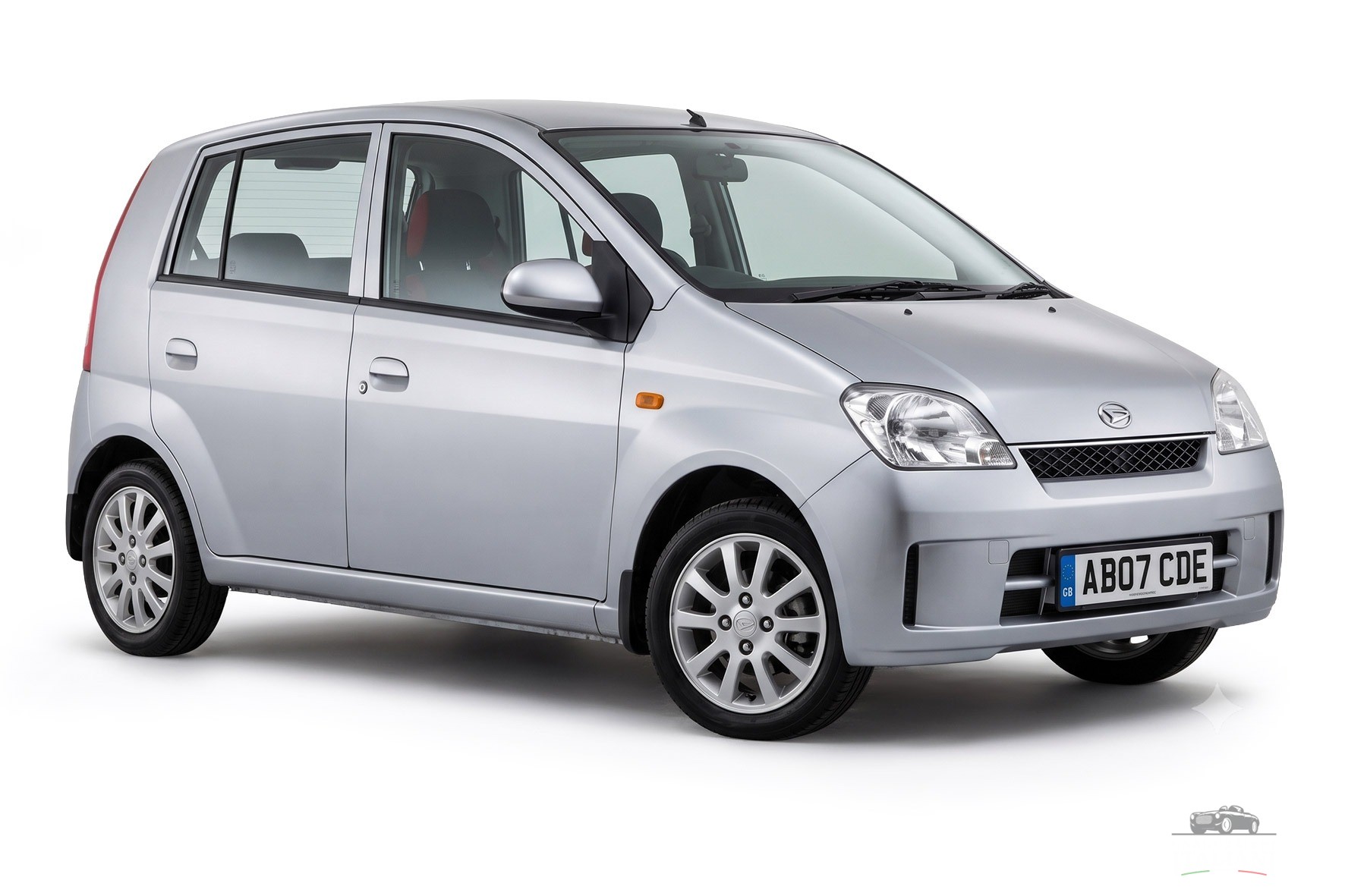
The Daihatsu Mira, first introduced in 1980, has long been a cornerstone of Japan’s kei car market, offering practical, space-efficient mobility in a compact package. By the time the sixth generation launched in 2003, the Mira had firmly established itself as one of the most recognizable names in the A-segment microcar category. With this new version, Daihatsu took a bold step forward, unveiling an entirely new platform and a fresh design concept created by Fabrizio Giugiaro at Italdesign. Marking a sharp departure from the rounded, softer forms of previous iterations, the sixth-generation Mira embraced a more angular, MPV-inspired design. Fabrizio Giugiaro’s influence is immediately evident in the clean-cut lines, upright stance, and increased cabin volume—features that not only modernized the car’s look but also dramatically improved interior functionality. The more vertical rear and high roofline maximized headroom and cargo versatility, allowing the Mira to serve as both a commuter and a practical family micro-van. One of the key engineering advances of this generation was the adoption of a completely new chassis that allowed for a forward-mounted engine layout. This adjustment enabled a significant expansion of the passenger compartment, delivering surprising space in such a compact footprint—especially important within the tightly regulated kei car dimensions. In Japan, the Mira remained compliant with kei standards, featuring small-displacement 660cc combustion engines, low emissions, and exceptional fuel economy. European versions, adapted for different market needs, featured slightly longer bumpers and larger engines, typically around 1.0 liter, to meet performance and safety expectations. Unveiled in 2003, the sixth-generation Daihatsu Mira represented more than just a model update—it was a design and engineering reinvention. Giugiaro’s crisp, space-maximizing vision helped set the tone for the modern micro-utility car: compact on the outside, surprisingly spacious within, and smartly styled for life in the city and beyond.
IN THE ARCHIVE
Related people
IN THE ARCHIVE
Coachbuilders & design studios
02 / TECHNICAL IDENTITY
Specifications & construction
Production & construction
- Production type
- Mass
Engine & performance
- Specification notes
- Chronology resolved: Daihatsu launched the sixth-generation Mira in December 2002. Stable body invariants across the 2002 range are wheelbase 2390 mm, length 3395 mm and width 1475 mm. Height, weight, engine, transmission and drivetrain vary by grade (including 3-/5-door, FF/4WD and Mira Avy derivatives) and remain variant-level.
Dimensions & accommodation
- Wheelbase
- 2,390 mm
- Length
- 3,395 mm
- Width
- 1,475 mm
Design & manufacture
- Designer · Documented
- Fabrizio Giugiaro
- Design Studio · Documented
- Italdesign
- Manufacturer · Documented
- Daihatsu
06 / EVENTS & AWARDS
Events & awards
No events or documented awards are currently recorded for this vehicle.
07 / THE VEHICLE IN DETAIL
Photo gallery 1 photographs
08 / FROM THE ARCHIVE
Archive
References held in the vehicle dossier. Their inclusion does not establish that every historical claim has been independently verified.
| Reference | Source type |
|---|---|
| Daihatsu official model history — Mira u-catch.daihatsu.co.jp | Manufacturer model history |
| Daihatsu U-CATCH — Mira 2002 model u-catch.daihatsu.co.jp | Manufacturer official catalogue |
| Daihatsu U-CATCH — Mira X December 2002 u-catch.daihatsu.co.jp | Manufacturer official catalogue |

THE CONVERSATION
Comments 0
Share a memory, a period photograph or a documented detail about this car.