
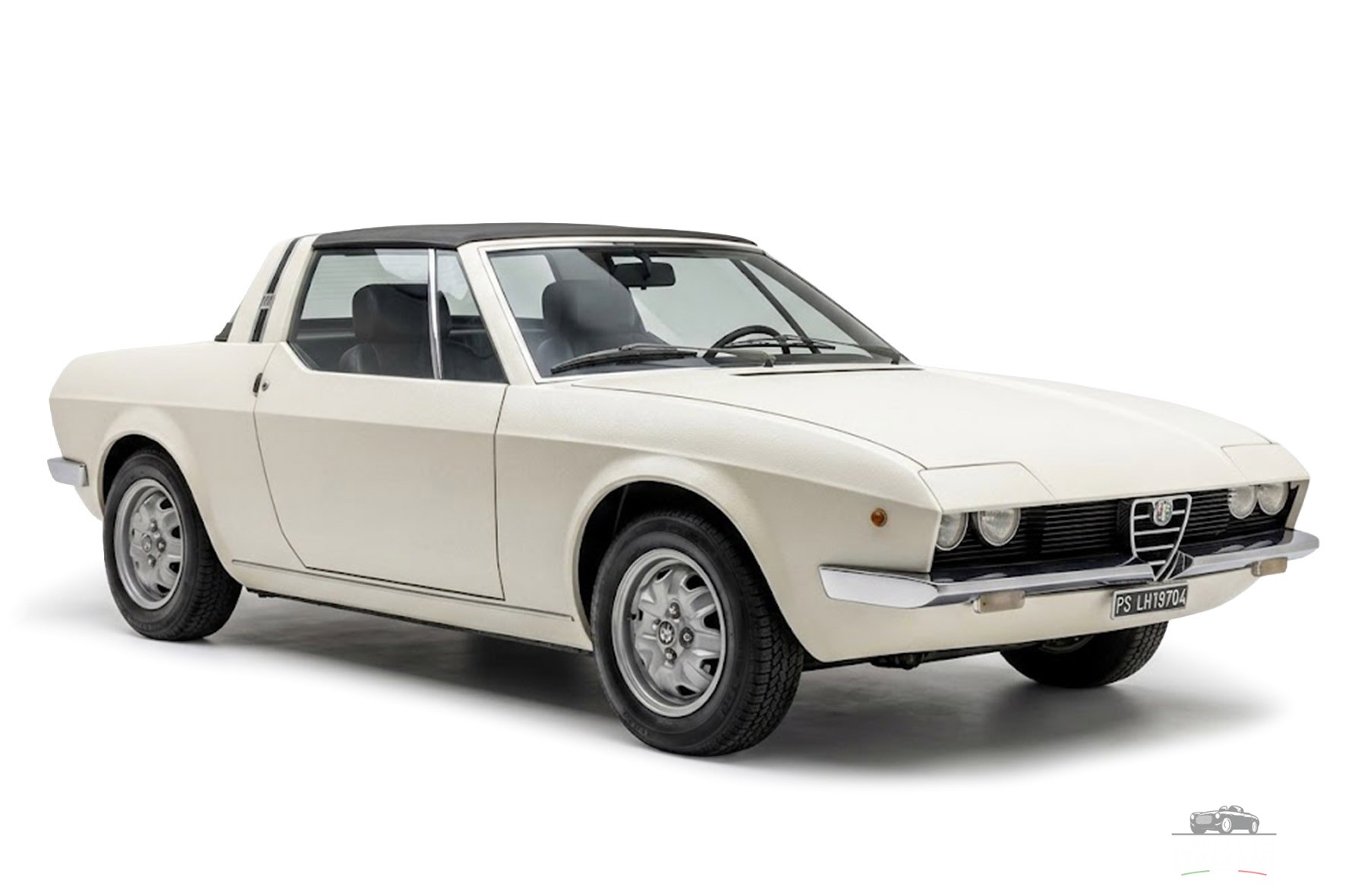
THE VEHICLE AT A GLANCE
Model dossier
- Production period
- 1972
- Body style
- Spider / Targa
- Type
- Prototype
THE PEOPLE BEHIND THE CAR
Coachbuilding, design & conversions

PRICE & SALES RECORD
Vehicle value
- Original price
- Not documented
- Latest recorded sale
- Not documented
01 / THE STORY
History & context
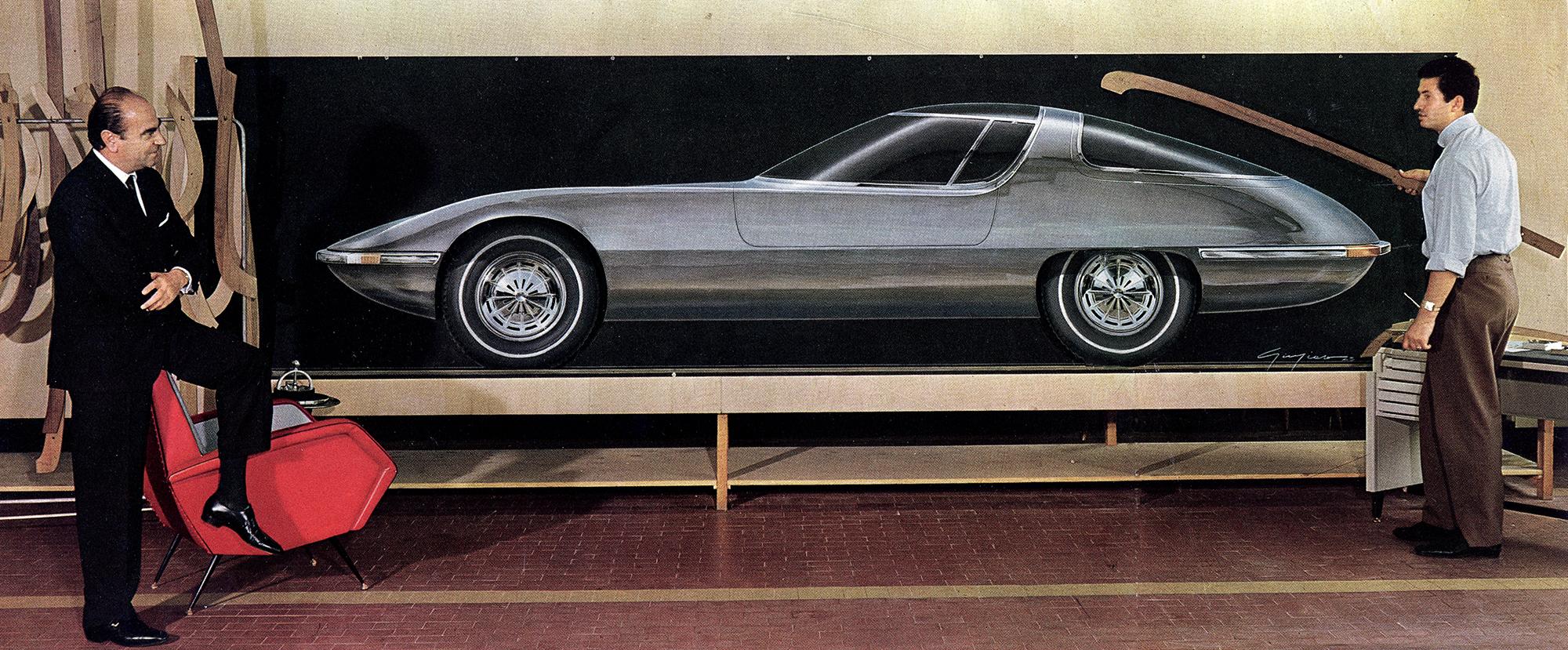
The Alfa Romeo Alfasud Spider prototype, crafted by Italdesign in 1972, is one of those rare concept cars that feels more like a missed opportunity than a mere styling exercise. Its proportions, details, and design maturity make it look like a production-ready roadster rather than a studio fantasy. Had Alfa given the go-ahead, this sleek targa-top could have easily reached showrooms within a couple of years, sliding neatly between the Fiat X1/9 and the Lancia Beta Spider. It might even have beaten them both to the punch. Built on the same mechanical base as the standard Alfasud—front-wheel drive, flat-four boxer engine, and compact underpinnings—the Spider reinterpreted Alfa’s ambitious southern venture as something far more playful and aspirational. Yet, despite the targa formula enjoying a moment of fashion in the late ’60s and early ’70s, it remained a niche within a niche. The market space was tight, with few direct rivals beyond the Matra M530 and Porsche 914, plus a handful of coachbuilt oddities like the Opel Kadett Aero or BMW E21 Baur. Still, compared to many of those, the Alfasud Spider looked entirely credible. It wasn’t quirky—it was confident. The styling, viewed in the context of its time, is pure early Giugiaro. It’s taut, angular, and defined by sharp creases. There’s a whiff of the Volkswagen K70 in the flat surfaces and subtle corners. At the front, there’s a clear nod to the Alfa Montreal in the tucked-in quad headlamps and that rising door line that meets the B-pillar with purpose. It’s a subtle but effective way to add visual drama without excess. Around the back, the Spider’s rear end is long and almost brutally squared off, another Giugiaro hallmark. The taillights—horizontal red slits—would go on to inspire those used on the Alfetta GT and Alfasud Sprint. The structural rollbar gives the car a planted, architectural finish and adds a sense of integrity to the targa design. It doesn’t just look the part—it feels plausible. There’s something delightfully functional about the whole composition. The rear deck is long, maybe even exaggeratedly so, but it gives the car a distinctive profile that balances out the very compact cabin. It also likely had practical benefits—space for luggage or packaging, always a consideration in Giugiaro’s world of real-world design. Some observers have even drawn parallels with Giugiaro’s later work, including the Aston Martin Twenty-Twenty concept, where echoes of the same vertical rollbar, flat tail, and squared-off rear linger. This wasn’t a show car built to shock. It was a clever, realistic proposal that very nearly could have joined the Alfa lineup. But for reasons likely involving budget, brand strategy, and overlapping products, it remained a dream on wheels.
IN THE ARCHIVE
Related people
IN THE ARCHIVE
Coachbuilders & design studios
02 / TECHNICAL IDENTITY
Specifications & construction
Production & construction
- Production type
- Prototype
- Body & configuration · Legacy attribution
- Targa Top
Engine & performance
- Specification notes
- Giugiaro's official project history confirms that an Alfasud Spider design/prototype was developed but never reached series production. The primary design history does not provide a Spider-specific mechanical specification; production Alfasud engine data are not inherited.
Design & manufacture
- Designer · Candidate
- Giorgetto Giugiaro
- Manufacturer · Documented
- Alfa Romeo
- Design Studio · Documented
- Italdesign
06 / EVENTS & AWARDS
Events & awards
No events or documented awards are currently recorded for this vehicle.
07 / THE VEHICLE IN DETAIL
Photo gallery 4 photographs
08 / FROM THE ARCHIVE
Archive
No publishable archival references are currently catalogued for this vehicle.
THE CONVERSATION
Comments 0
Share a memory, a period photograph or a documented detail about this car.