
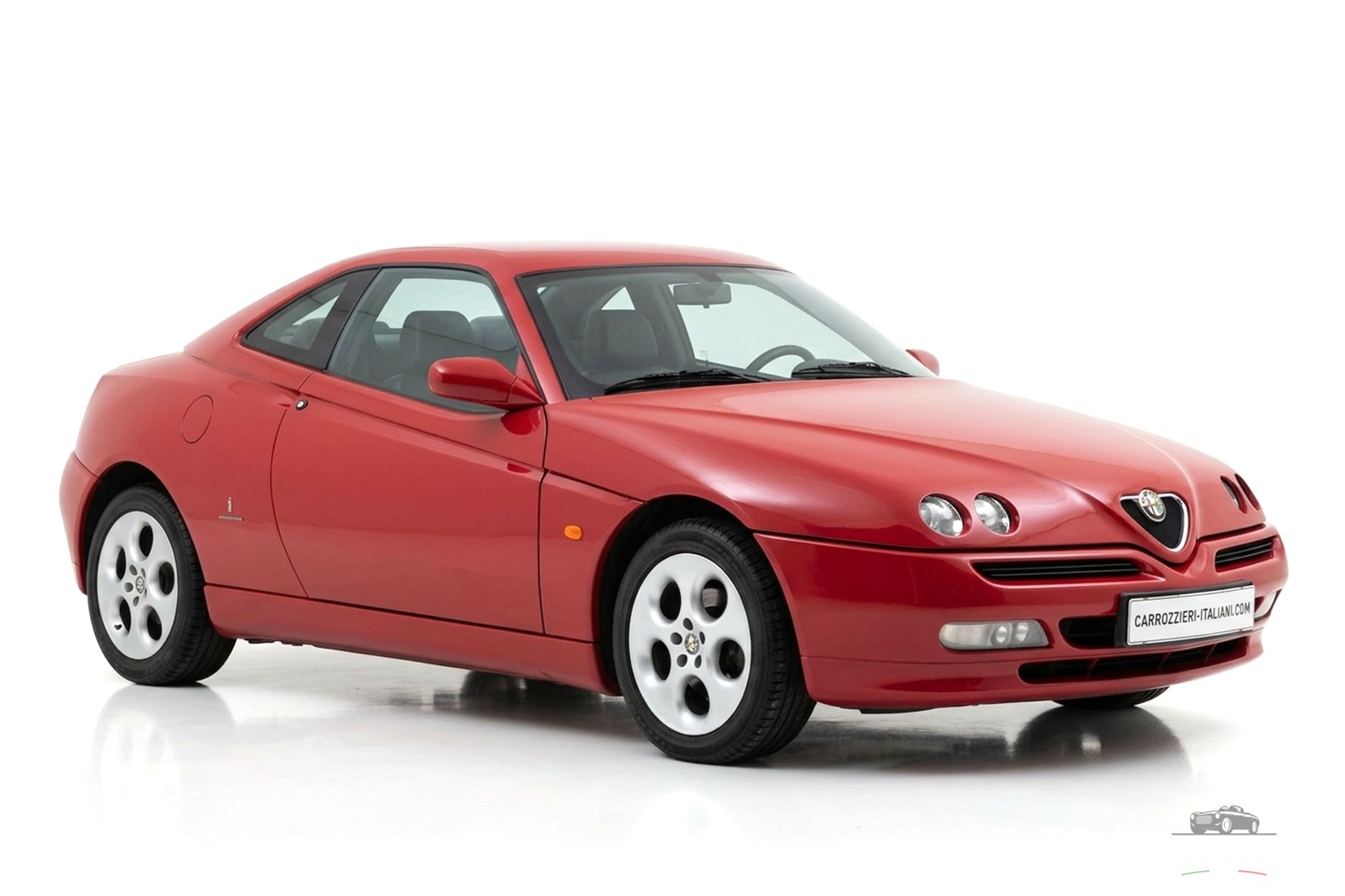
THE VEHICLE AT A GLANCE
Model dossier
- Manufacturer
- Alfa Romeo
- Base model
- GTV 916
- Coachbuilt version
- Pininfarina/Alfa Romeo production family; Arese build to 2000, Pininfarina assembly thereafter
- Coachbuilder
- Pininfarina
- Production period
- 1994
- Body style
- Coupé
- Designer
- Enrico Fumia
THE PEOPLE BEHIND THE CAR
Coachbuilding, design & conversions

PRICE & SALES RECORD
Vehicle value
- Original price
- Not documented
- Latest recorded sale
- Not documented
01 / THE STORY
History & context
The Alfa Romeo GTV Pininfarina and its Spider counterpart were initially offered with two engine options: the 2.0 Twin Spark (TS) and the 2.0 V6 Turbo for the GTV, while the Spider came with either the 2.0 TS or the more powerful 3.0 V6 12V. The exterior design was completed in July 1988, and production began in late 1993 at the Alfa Romeo Arese Plant in Milan, starting with four 3.0 V6 Spiders. The first GTV, equipped with the 2.0 Twin Spark engine, rolled off the production line in early 1994. The official premiere for these models took place at the Paris Motor Show in 1994, and they were later launched at the Geneva Motor Show in March 1995, with sales commencing the same year. A distinctive feature of the V6 Turbo GTVs was the presence of two air intakes on the lower lip of the front bumper, one for the oil cooler and the other for the intercooler. In contrast, early V6 Spiders did not have additional intakes since their oil coolers were mounted in front of the radiator. The production of the Alfa Romeo GTV and Spider was divided into three distinct phases. Phase 1 cars were characterized by a black plastic grille in the nose of the bonnet, which lacked the chrome edging found in later versions. Additionally, these models featured black-painted sills all around the vehicle. The design and engineering of the Alfa Romeo GTV and Spider reflect the collaboration between Alfa Romeo and Pininfarina, resulting in a stylish and performance-oriented range of cars that garnered attention and admiration upon their release. The phased production approach allowed for continuous improvements and refinements, contributing to the enduring legacy of these iconic models.
02 / TECHNICAL IDENTITY
Specifications & construction
Production & construction
- Production type
- Mass
- Production notes
- Pininfarina is the design studio for the 916 programme. Assembly was at Alfa Romeo Arese through 2000; after Arese production ended, GTV assembly moved to Pininfarina. Do not expose Pininfarina as assembler/body builder for the entire family.
Dimensions & accommodation
- Wheelbase
- 2,540 mm
- Length
- 4,285 mm
- Width
- 1,780 mm
- Height
- 1,320 mm
- Wheelbase
- 2540 mm
- Length
- 4285 mm
- Width
- 1780 mm
- Height
- 1320 mm
03 / DESIGN, BODY & SUPPLIERS
Design, body & suppliers
Design & manufacture
- Manufacturer · Documented
- Alfa Romeo
- Coachbuilder / Design Studio · Documented
- Pininfarina
- Designer · Candidate
- Enrico Fumia
Body form & construction
- Body style
- Coupé
04 / EVENTS & CHRONOLOGY
Events & chronology
Paris General · legacy_preserved
- Date
- 1994
- Chassis
- General
Preserved CI 1.0 relation. Evidence field: _yoast_wpseo_primary_events. No award inferred.
Goldenes Lenkrad General · From the historical archive
- Date
- 1995
- Chassis
- General
CHRONOLOGICAL RECORD
General chronology
Chronological history2 dated records
- Unassigned chassis · Event
Paris
- Unassigned chassis · Event
Goldenes Lenkrad
08 / GALLERY
Photo gallery 3 photographs
09 / PERIOD ARCHIVE
Period photographs & advertising
The period archive gallery will show historical photographs, advertisements, brochures and press images once assets, provenance and usage rights have been recorded in the masterfile.

THE CONVERSATION
Comments 0
Share a memory, a period photograph or a documented detail about this car.