
THE VEHICLE AT A GLANCE
Model dossier
- Production period
- 1963
- Body style
- Coupé
- Type
- Limited
- Production
- 2
THE PEOPLE BEHIND THE CAR
Coachbuilding, design & conversions

PRICE & SALES RECORD
Vehicle value
- Original price
- Not documented
- Latest recorded sale
- Not documented
01 / THE STORY
History & context
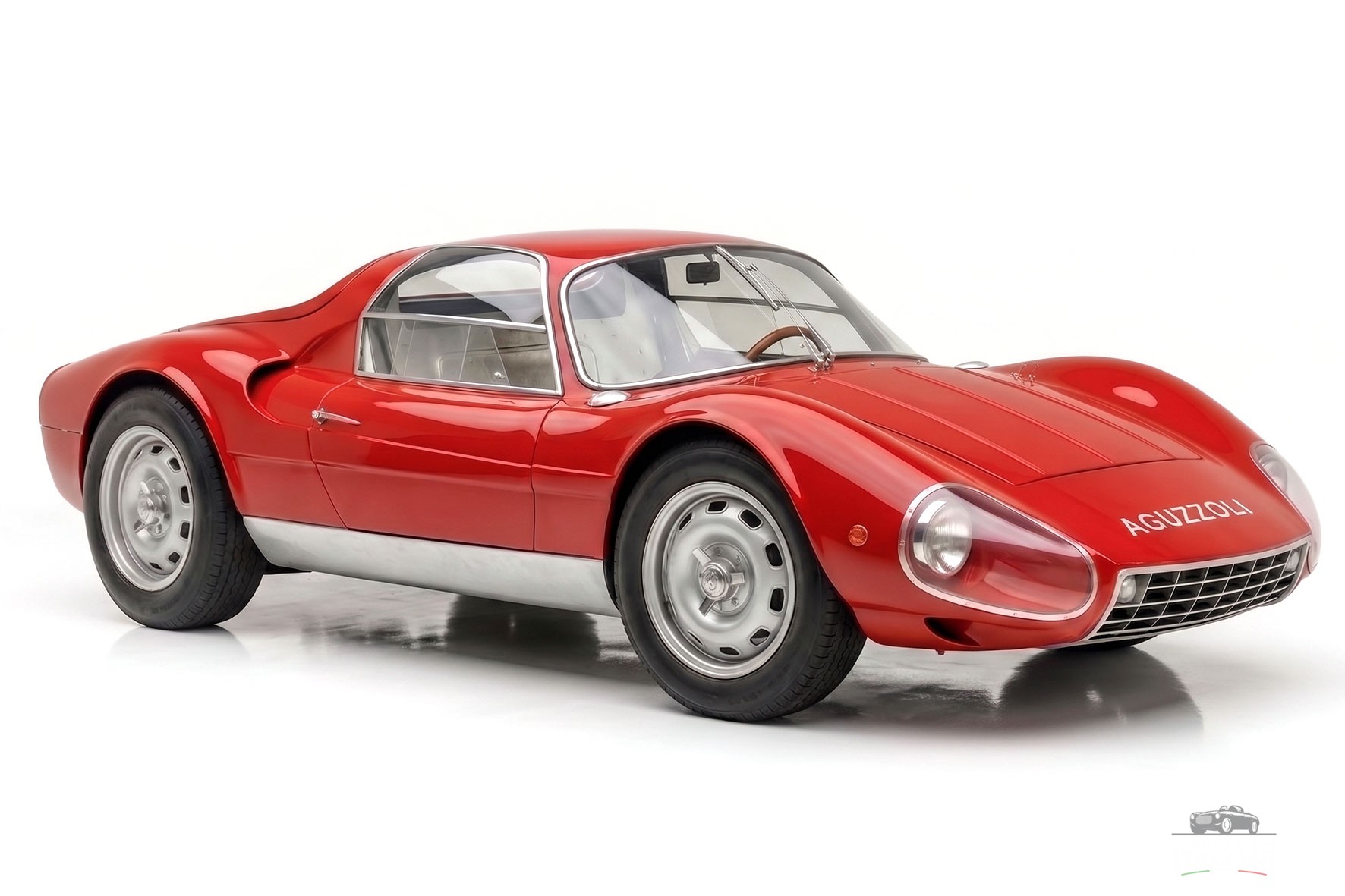
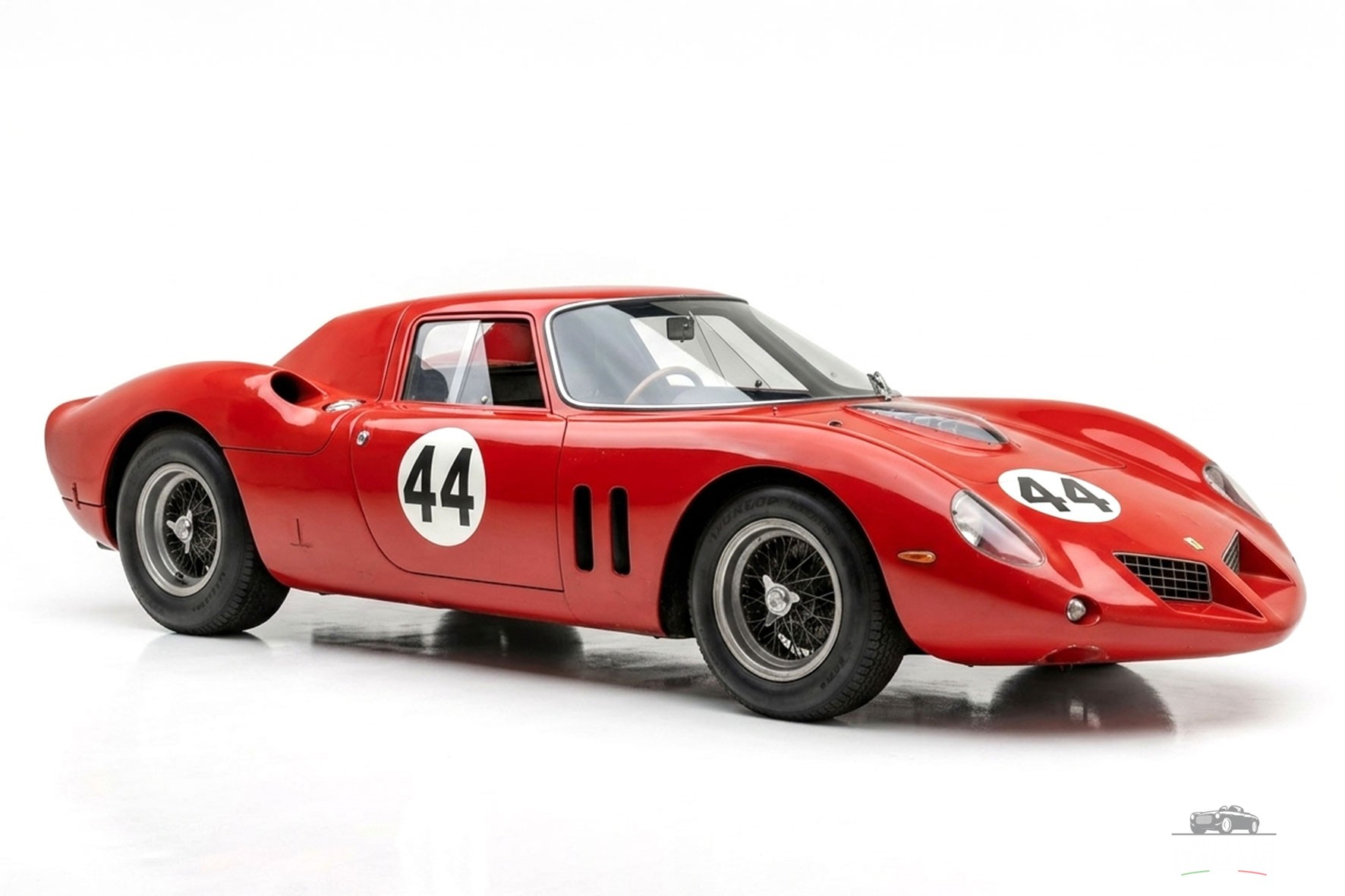
The Aguzzoli Condor, born from the ingenuity of Giovanni and Sergio Aguzzoli, represents a remarkable chapter in automotive history. Built on the chassis of an Alfa Romeo Giulia TZ and powered by the Giulietta SZ engine, this vehicle was baptized “Aguzzoli” after the dealership and “Condor” as a tribute to Sergio Aguzzoli himself. The journey of the Condor began with promising test runs at the Modena Autodrome in autumn 1963, conducted by Luigi Bertocco, yielding encouraging results that propelled its entry into the prestigious Coppa Fisa at Monza on November 14, 1963. This event marked the debut not only of the Condor but also of the Alfa Romeo Giulia TZ series. Despite a last-minute change where the designated driver opted for a different vehicle, the Condor captivated Alfa Romeo’s Experimental Department with its mechanical prowess, sparking discussions of potential racing development. While Alfa Romeo had considered establishing a racing department with Aguzzoli, the partnership eventually materialized with Autodelta, founded by engineer Carlo Chiti and the Chizzola brothers. Nevertheless, undeterred, another chassis was prepared to advance the Condor project further. The second iteration featured the Alfa Romeo Giulia TZ engine, a Hewland gearbox, and a fiberglass body designed by sculptor Franco Reggiani in Sant’Ilario d’Enza and built by Drogo Carrozzeria Sports Cars. Painted black with red accents and adorned with red leather interiors, it debuted at the Paris Motor Show before hitting the streets for testing. However, initial road tests revealed issues with the front end’s aerodynamics, prompting modifications to raise the frontal profile and introduce a conventional air intake. Re-painted in red and fitted with new 14-inch wheels, the revised Condor demonstrated improved performance and aesthetics. The debut of both the original and revised Condor models at the Trento-Bondone hill climb in July 1964 showcased their potential, with Luigi Bertocco and Umberto Masetti achieving notable finishes. Success continued at subsequent events, culminating in a significant victory at the Coppa Fisa in December 1964, where Ernesto Brambilla and Bertocco secured podium positions. Despite challenges in early 1965, including setbacks at the Monza 1000 Km race, the Condor persevered. The 1730cc engine upgrade proved pivotal, leading to a triumphant showing at the Castione Baratti – Neviano Arduini hill climb in June 1965, where Bertocco defeated the formidable Abarth 2000 models, marking a historic moment for Aguzzoli and the Condor legacy.
IN THE ARCHIVE
Coachbuilders & design studios
02 / TECHNICAL IDENTITY
Specifications & construction
Production & construction
- Production
- 2
- Production type
- Limited
Engine & performance
- Specification notes
- The Condor family contains two documented cars with different engines, transmissions, body construction and wheelbases: #1 around 1300 cc/128 hp/2200 mm and #2 later around 1575 cc/165 CV/2250 mm. A single family specification would conflate two physical cars.
Design & manufacture
- Designer · Candidate
- Piero Drogo
- Coachbuilder / Body Builder · Documented
- Sports Cars
- Manufacturer · Documented
- Aguzzoli & Co.
06 / EVENTS & AWARDS
Events & awards
No events or documented awards are currently recorded for this vehicle.
07 / THE VEHICLE IN DETAIL
Photo gallery 6 photographs
08 / FROM THE ARCHIVE
Archive
References held in the vehicle dossier. Their inclusion does not establish that every historical claim has been independently verified.
| Reference | Source type |
|---|---|
| Aguzzoli Condor technical history it.wikipedia.org | Historical model reference |
| Aguzzoli Condor — chassis evolution en.wikipedia.org | Historical model reference |
| Officina Tagliacollo — Aguzzoli Condor officinatagliacollo.com | Specialist historical reference |
THE CONVERSATION
Comments 0
Share a memory, a period photograph or a documented detail about this car.